
Abstract
White to pale, rubbery intravascular fibrous casts recovered during routine embalming were analyzed using Raman micro spectroscopy (633 nm and 785 nm excitation), the Kjeldahl method for total crude protein estimation, and ion exchange chromatography for amino acid profiling. Raman spectra from both specimens exhibited strong protein signatures, with notable differences in the Amide I/Amide III intensity ratio and the presence of a 1620 cm⁻¹ Amide I sub band. Expert Raman analysis distinguishes a native like, predominantly α helical configuration in one specimen from a more β sheet enriched, aggregation advanced state in the other (S1 vs S2). Additional spectral markers in the β sheet enriched specimen, including sharper aromatic ring breathing modes and phosphorylation associated bands, suggest a more ordered and stabilized secondary structure arrangement. Kjeldahl analysis measured total crude protein at 7.72 m/m% for the analyzed sample, and ion exchange amino acid profiling returned the composition listed in Results. The combined spectroscopic and compositional data indicate that these casts represent atypical protein aggregates exhibiting heterogeneity consistent with stage dependent β sheet enrichment, distinct from conventional postmortem thrombi. Although donor histories were unavailable, the distinct physical and spectroscopic features of these casts may aid in their recognition during embalming and postmortem examination.
Keywords
Raman micro spectroscopy intravascular casts β sheet enrichment protein aggregates Kjeldahl analysis ion exchange chromatography secondary structure embalming forensic pathology.
Introduction
Since 2021, embalmers have reported anomalous intravascular fibrous casts encountered during routine preparation of the deceased and a multiyear international survey documents such selfreported observations across five countries from 2022–2025 [1]. These whitetopale, rubbery, elongated structures differ markedly from conventional postmortem thrombi in morphology and mechanical behavior, exhibiting unusual tensile strength, elasticity, and resistance to routine lysis procedures. Their biochemical composition and structural organization remain incompletely characterized, and systematic analytical data are limited [2,3].
Raman microspectroscopy provides a nondestructive means of probing the molecular architecture of proteinaceous materials. Its sensitivity to amide vibrational modes enables discrimination among αhelical, disordered, and βsheetenriched secondarystructure states, and it has been widely applied to the study of fibrillar and aggregated protein assemblies [4-6]. Complementary Kjeldahl determination of total crude protein and ionexchange chromatography for aminoacid profiling offer orthogonal measures of bulk protein composition, permitting assessment of aminoacid enrichment patterns that may correlate with atypical structural organization.
In this study, we characterize representative specimens of the fibrous intravascular material using Raman microspectroscopy alongside Kjeldahl protein quantitation and aminoacid analysis. Our objective was to determine whether integrated structural and compositional signatures align with conventional postmortem clot biology or instead support classification of the material as atypical, βsheetenriched protein aggregates. The data presented here indicate that these signatures are inconsistent with conventional postmortem thrombi and instead support classification of the casts as atypical protein aggregates with noncanonical secondarystructure organization exhibiting heterogeneity consistent with stagedependent βsheet enrichment.
Materials and Methods
Sample origin and handling
The anomalous intravascular fibrous material examined in this study was recovered incidentally during routine embalming procedures performed in standard mortuary practice. These structures were removed as part of the normal preparation required to clear vascular obstructions to permit effective administration of embalming fluid. The material was obtained postmortem under standard donor or nextofkin authorization procedures and in accordance with local mortuary regulations. All samples were anonymized and deidentified prior to analysis and contained no identifiable personal information. Because this work involves only deidentified cadaveric material collected during routine embalming and no interaction with living subjects, it was considered exempt from Institutional Review Board oversight under applicable regulations (e.g., 45 CFR 46).
Raman microspectroscopy
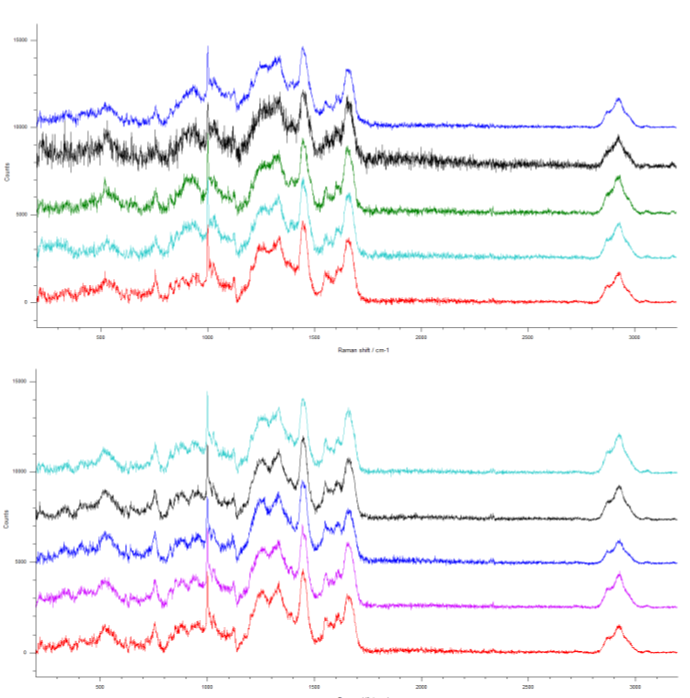
Raman measurements were performed at the HUN-REN Wigner Research Centre for Physics (Budapest, Hungary) on two solid specimens (S1 and S2) delivered in sealed vials. Particles a few millimeters in size were removed from residual liquid, placed onto a siliconwafer substrate, and allowed to dry completely at ambient conditions. Spectra were acquired using a Renishaw InVia microRaman spectrometer with 633 nm and 785 nm excitation lasers and a 50× objective (NA = 0.9), yielding an excitation spot diameter of approximately 2–4 µm. Spectra were collected over 200–3100 cm⁻¹ (633 nm) and 200–3200 cm⁻¹ (785 nm). A polynomial baseline subtraction was applied to remove fluorescence background. For each specimen and excitation wavelength, five spectra were recorded at distinct locations to assess intrasample variability. Representative measurement positions and raw spectra are shown in the figures; the full spectral datasets and expert interpretation are provided in the Supplementary Material. Raman criteria and peak assignments follow established literature for protein secondarystructure analysis and fibrillar aggregates [4,5].
Protein and aminoacid analysis
Total crude protein content was determined by the Kjeldahl method at the University of Debrecen (Debrecen, Hungary) following MSZ EN ISO 59832:2009 (report K24/153; Supplementary Material). Aminoacid composition was determined by ionexchange chromatography following acid hydrolysis (MSZ EN ISO 13903:2005). Results are reported as masspermass percentages (m/m%) for each aminoacid species. Comparative literature values for fibrin(ogen) and postmortem clot composition were consulted [7-9].
Macroscopic appearance
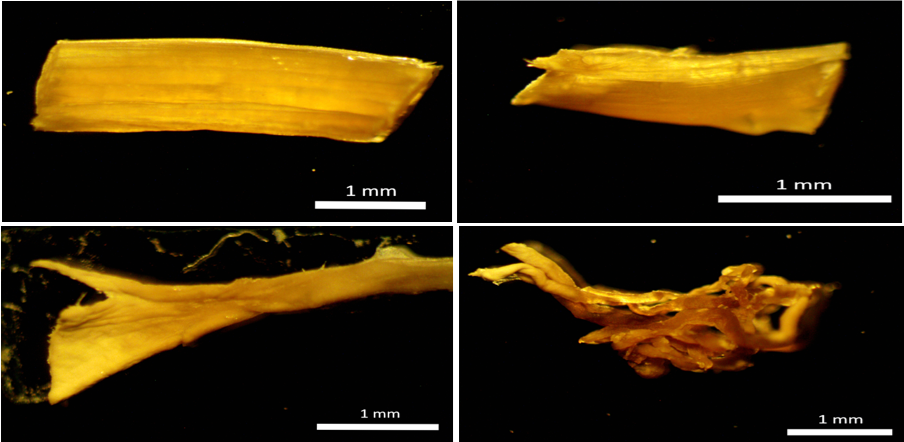
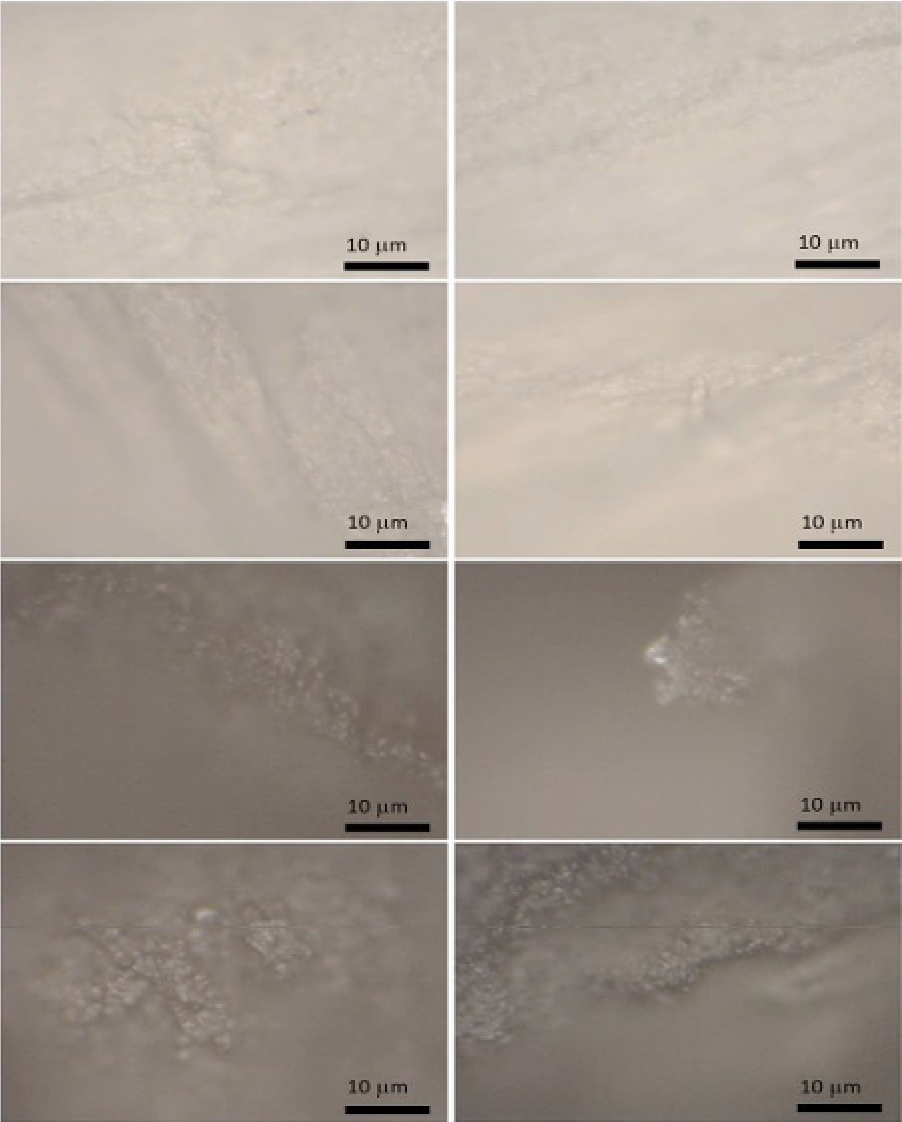
The dried specimens differed visibly in color: S1 appeared light brown–yellow, whereas S2 was dark brown (Figure 1). Measurement spots selected for Raman analysis showed corresponding textural heterogeneity, with S1 exhibiting smoother, lighter regions and S2 displaying darker, more granular surfaces (Figure 2).
Results
Raman spectroscopy
Raman spectroscopy at 633 nm
Spectra acquired at 633 nm exhibited clear protein signatures in both specimens (Figure 3). Prominent C–H stretching bands at ~2870, 2930, and 2970 cm⁻¹ indicated contributions from aliphatic and aromatic side chains. The fingerprint region was dominated by Amide I (~1655 cm⁻¹) and Amide III (~1255 cm⁻¹) vibrations, consistent with peptide backbone structure. Additional marker bands included phenylalanine (~1000 cm⁻¹) and tryptophan (~752–753 cm⁻¹). Across the series, S2 displayed more intense and more numerous Raman features than S1, consistent with the expert report’s observation of greater spectral definition in the darker specimen. These Ramanbased distinctions reflect differences in secondarystructure organization and spectral order but do not by themselves establish the presence of canonical amyloid fibrils [4].
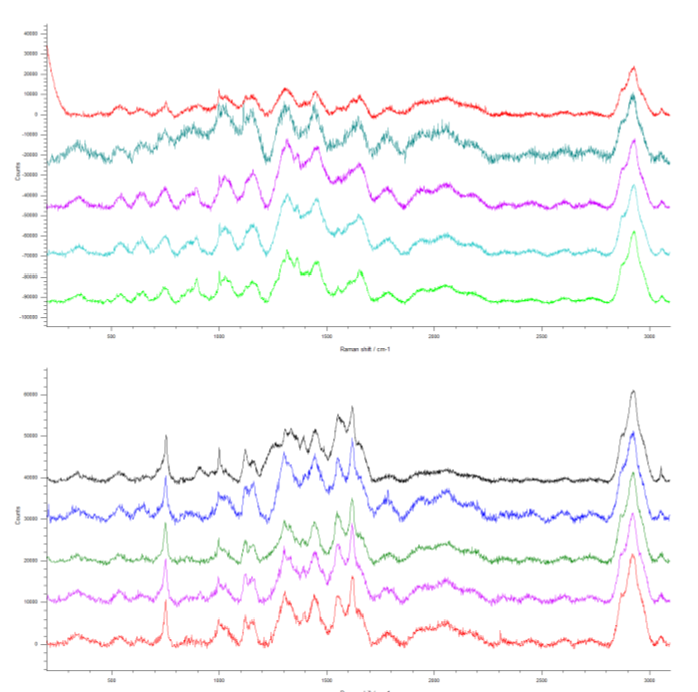
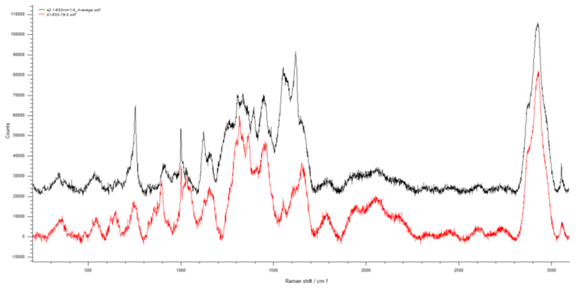
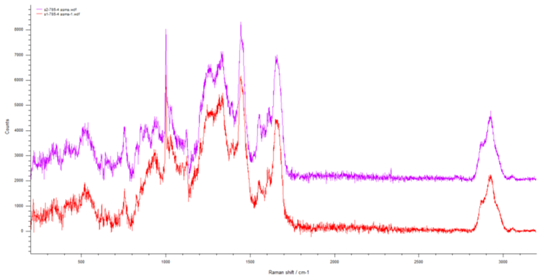
Representative spectra (Figure 4) revealed systematic differences between S1 and S2. The most diagnostic feature was the Amide I/Amide III intensity ratio, which was markedly higher in S1 and lower in S2. Additional differentiating peaks were observed at ~750 cm⁻¹, 896 cm⁻¹, 1122 cm⁻¹, 1365 cm⁻¹, 1395 cm⁻¹, and 1621 cm⁻¹. These variations are consistent with differences in local chemical environment and backbone organization between the two specimens. Detailed peak assignments, spectral fitting parameters, and full raw datasets are provided in the Supplementary Raman report; Raman criteria and assignments follow established literature for protein secondarystructure analysis and fibrillar aggregates [5,6].
Raman spectroscopy at 785 nm
Spectra collected at 785 nm (Figure 5) showed broadly similar protein features in both specimens, including Amide I, Amide III, and C–H stretching bands. Differences between S1 and S2 were present but less pronounced than at 633 nm (Figure 6), consistent with reduced resonant enhancement of specific structural motifs at the longer excitation wavelength [4]. Representative spectra and comparative plots are provided in the Supplementary Material; peak assignments and fitting parameters follow established criteria for protein secondarystructure analysis.
Raman Spectral Interpretation
Interpretation of structural differences
Independent expert analysis interpreted the Amide I/Amide III intensity ratio as indicative of secondarystructure organization. The higher ratio observed in S1 is consistent with a nativelike, predominantly αhelical configuration (prefibrillar or earlyintermediate state), whereas the lower ratio in S2, together with the pronounced Amide I subband at ~1620 cm⁻¹, corresponds to a more advanced, βsheetenriched configuration. These interpretations follow established Raman criteria for differentiating ordered versus disordered protein aggregates; detailed peak assignments and spectral fitting parameters are provided in the Supplementary Raman report.
Aminoacid composition (Kjeldahl analysis)
Kjeldahl and ionexchange analysis of a representative sample (Table 1) yielded the following notable values: proline 1.55 m/m%, lysine 1.18 m/m%, and cysteine 0.01 m/m%. The overall aminoacid profile differs from typical literature values reported for conventional postmortem fibrin clots and many characterized amyloid proteins [7,10,11]. Elevated proline may favor βturns or irregular motifs, while the extremely low cysteine level is consistent with limited disulfidebonded stabilization. These compositional features are concordant with the Ramanderived evidence for noncanonical secondarystructure organization. The spectroscopist also noted broad, inconclusive features in the 480–570 cm⁻¹ and 680–790 cm⁻¹ regions that could reflect weak disulfide or C–S contributions, but these bands were not definitive.
Analytical caveat
The reported aminoacid percentages represent the hydrolyzable protein fraction of the fibrous casts and do not quantify nonproteinaceous components or the entire sample mass; absolute percentages are therefore low by design.
Integrated interpretation
Taken together, the Ramanderived structural signatures and the Kjeldahlderived compositional profile indicate that the examined material represents an atypical, proteincontaining aggregate with noncanonical secondarystructure organization [4,5,12]. The data are consistent with staged-dependent β-sheet enrichment, progressing from a nativelike, αhelical state in S1 toward a more βsheetenriched, aggregationadvanced state in S2. While these observations support classification of the casts as atypical protein aggregates distinct from conventional postmortem thrombi, they do not by themselves establish the presence of canonical amyloid fibrils; complementary ultrastructural or immunochemical assays would be required to confirm amyloid morphology or specific protein identity [10,13].
| Amino Acid | Content (m/m%) |
| Aspartic acid (Asp) | 1.19 |
| Threonine (Thr) | 0.27 |
| Serine (Ser) | 0.58 |
| Glutamic acid (Glu) | 0.60 |
| Proline (Pro) | 1.55 |
| Glycine (Gly) | 0.37 |
| Alanine (Ala) | 0.21 |
| Cysteine (Cys) | 0.01 |
| Valine (Val) | 0.20 |
| Methionine (Met) | 0.05 |
| Isoleucine (Ile) | 0.16 |
| Leucine (Leu) | 0.33 |
| Tyrosine (Tyr) | 0.05 |
| Phenylalanine (Phe) | 0.07 |
| Histidine (His) | 0.22 |
| Lysine (Lys) | 1.18 |
| Arginine (Arg) | 0.26 |
*Notes (translated from laboratory report originally written in Hungarian): 1. The sum of the tested amino-acids does not equal 100%. the reported sum represents only the total of the individually measured amino-acids. 2. The amino acid profile reflects the composition of the protein fraction (or the measurable portion thereof) and does not represent the composition of the entire sample.
Discussion
Raman evidence for differential secondarystructure organization
Raman microspectroscopy of the two anomalous intravascular fibrous specimens produced proteindominant spectra characterized by prominent Amide I and Amide III vibrations. The principal spectral distinction was the Amide I/Amide III intensity ratio: a relatively high ratio in S1 is consistent with a nativelike, predominantly αhelical configuration (prefibrillar or earlyintermediate state), whereas the lower ratio in S2, together with a pronounced Amide I subband at ~1620 cm⁻¹, indicates a shift toward intermolecular βsheet enrichment [4,5]. Detailed peak assignments and spectral fitting parameters are provided in the Supplementary Raman report. These spectroscopic differences plausibly underlie the variable mechanical resilience and persistence reported for these casts during embalming.
Additional spectral markers
S2 exhibited sharper aromatic ringbreathing modes and clearer features in the 1360–1450 cm⁻¹ region, consistent with increased spectral order and backbone stabilization. Broad, lowintensity bands in the 480–570 cm⁻¹ and 680–790 cm⁻¹ regions may reflect weak disulfide or C–S contributions, but their breadth and overlap preclude definitive assignment by Raman alone. Weak signals in the 900–1100 cm⁻¹ region could indicate phosphaterelated vibrations; however, overlap with the strong phenylalanine band near 1000 cm⁻¹ limits interpretive certainty [9,14]. These observations underscore the chemical complexity of the material and the need for orthogonal chemical and structural assays.
Aminoacid composition and structural implications
Kjeldahl and ionexchange analysis of a representative specimen revealed elevated proline (1.55 m/m%) and lysine (1.18 m/m%) and markedly low cysteine (0.01 m/m%). Elevated proline can favor βturns or irregular motifs that facilitate aggregation, while minimal cysteine suggests limited disulfidebonded stabilization. The aminoacid profile departs from published compositions of human fibrinogen/fibrin and many characterized amyloid proteins, supporting the interpretation of a noncanonical protein aggregate [7,10]. These compositional data are concordant with the Ramanderived evidence for altered secondarystructure organization but do not identify the constituent protein(s).
Integrated interpretation and limits of spectroscopic terminology
Taken together, the Raman and aminoacid data support classification of the examined material as atypical, proteincontaining aggregates exhibiting a spectroscopic maturation pattern from a nativelike, αhelical state (S1) toward a more βsheetenriched, aggregationadvanced state (S2) [4,5]. This description denotes a spectroscopic phenotype rather than a definitive ultrastructural or molecular identification. βSheet enrichment alone is not diagnostic of canonical amyloid; confirmation of crossβ fibrillar architecture requires orthogonal methods such as transmission electron microscopy, Xray fiber diffraction, or Congo red birefringence with appropriate controls [10,13].
Context, alternative explanations, and prior observations
Stage-dependent aggregation from soluble or nativelike states to βsheetrich assemblies is well documented for many proteins and can alter mechanical properties and proteolytic resistance, offering a plausible framework for the persistence of these casts [15]. Exogenous or endogenous proteins can persist in tissues under particular circumstances, but no proteinspecific identification or immunohistochemistry was performed on the casts in this study, and donor exposure or infection histories are unknown [16]. Consequently, no causal link to any exposure, infectious agent, vaccine, or therapeutic intervention can be inferred from the present data.
| Raman peak position (cm⁻¹) Sample | Assignment | |
| S1 | S2 | |
| 3060 | 3060 | sp² CH stretching (aromatic) |
| 2970 | 2970 | Antisymmetric sp³ CH₃ stretching |
| 2930 | 2930 | Antisymmetric sp³ CH₂ stretching |
| 2870 | 2870 | Symmetric sp³ CH₃ stretching |
| 1655 | 1648 | Amide I (C=O stretch) |
| - | 1620 | Amide I, intermolecular β-sheet (C=O stretch) |
| 1550 | 1553 | Amide II (N–H bend + C–N stretch) |
| 1460 | 1450 | sp³ CH₂ and sp³ CH₃ deformation |
| - | 1393 | COO⁻ symmetric stretch / CH₃ deformation |
| 1363 | - | Tryptophan W7 |
| - | 1335 | CH deformation |
| 1315 | 1315 | CH₂ twist |
| 1256 | 1255 | Amide III (N–H bend + C–N stretch) |
| - | 1121 | C–N / C–O–P stretch (phosphoester) |
| 1030 | 1030 | Phenylalanine deformation |
| 1000 | 1000 | Aromatic ring-breathing, phenylalanine |
| 893 | - | C–C stretch |
| 744 | 753 | Tryptophan W18 |
| 647 | 647 | Tyrosine deformation |
| 620 | 620 | Phenylalanine deformation |
| 545 | 545 | S–S stretch (disulfide) |
Notes: Dashes (—) indicate the band is absent or not prominent in that sample. Assignments follow the detailed expert analysis in the supplementary Raman report
Implications for mortuary and forensic practice
The physical and spectroscopic properties described here may explain difficulties in clearing vascular obstructions and achieving uniform embalming fluid distribution. Recognition of these casts as proteinaceous aggregates with variable structural maturity could inform mortuary technique, targeted vessel manipulation, alternative injection strategies, or extended flushing protocols, and aid pathologists in distinguishing atypical intravascular casts from conventional postmortem thrombi [17].
Limitations and directions for future research
This study is descriptive and limited by small sample size, incomplete provenance, and lack of matched controls. Postmortem changes, embalming chemicals, preexisting pathology, or idiosyncratic biological factors may have influenced the observed features. Raman spectroscopy and Kjeldahl aminoacid profiling provide complementary structural and compositional information but cannot determine fibril ultrastructure, definitive protein identity, or formation mechanism. Future work should include larger, welldocumented cohorts with matched controls, blinded analyses, and orthogonal methods, proteomics for protein identification, immunohistochemistry for localization, electron microscopy and Xray fiber diffraction for ultrastructure, and biochemical assays to probe crosslinking and post-translational modifications, while avoiding premature causal attribution.
Conclusion
Raman microspectroscopy revealed clear protein signatures with marked differences in secondarystructure organization between specimens, most notably a divergence in the Amide I/Amide III intensity ratio: a high ratio in S1 consistent with a nativelike, αhelical state and a low ratio together with a ~1620 cm⁻¹ band in S2 indicative of progression toward βsheetenriched organization [4,5]. Complementary Kjeldahl aminoacid profiling demonstrated an atypical compositional pattern, elevated proline and lysine with minimal cysteine, that supports interpretation of a noncanonical, proteincontaining aggregate rather than a typical fibrin clot [7,10].
Taken together, these data provide structural evidence of heterogeneity consistent with stagedependent β-sheet enrichment within these atypical protein aggregates, with S1 representing an earlier or nativelike state and S2 showing features of a more advanced βsheetenriched assembly. This apparent staged progression offers a plausible explanation for the casts’ persistence during embalming. The analyses are descriptive and limited in scope: they do not identify specific protein constituents, determine ultrastructural architecture, or establish formation pathways.
These results underscore the need for systematic, multimodal investigation. Future studies incorporating proteomics, histochemistry, electron microscopy, controlled comparisons, and welldocumented provenance will be essential to clarify biochemical identity, structural evolution, prevalence, and potential clinical or postmortem significance.
Declarations
Ethical Statement
The anomalous intravascular fibrous material examined in this study was recovered incidentally during routine embalming procedures performed on deceased individuals in standard mortuary practice. The material was obtained as part of the normal preparation process required to clear vascular obstructions (such as clots or plugs) for effective administration of embalming fluid.
This study involves only postmortem cadaveric material and does not constitute human subjects research as defined by applicable regulations (e.g., 45 CFR 46). Therefore, it is exempt from Institutional Review Board (IRB) or ethics committee review. The handling and use of this material complies with ethical standards for cadaveric tissues, including respect for the dignity of the deceased. Authorization for embalming procedures and the handling of incidental materials generated during embalming was obtained through standard donor or next-of-kin consent processes in accordance with local regulations and mortuary protocols. All analyses were performed on anonymized samples with no linked personal identifiers.
Author Contributions
Miklós Veres: Conceptualization, Raman spectroscopic analysis and data interpretation.
Daniel Santiago: Conceptualization, Writing – Original Draft, Writing – Review & Editing, Formal analysis.
Greg Harrison: Conceptualization, Sample acquisition, Project administration, Formal analysis.
Dennis Planner and Mark File: Conceptualization, Writing – Review & Editing.
Funding
The author(s) reported there is no funding associated with the work featured in this article.
AI Disclosure
The authors used artificial intelligence, assisted tools solely for reference formatting and citation verification. All original ideas, analyses, interpretations, and textual content were conceived and written by the authors.
Acknowledgments.
The full Raman report (including all raw spectra, expert peak assignments, and commentary on proposed interpretations) is available as supplementary material A.
We also thank the mortician who provided the samples for this study.
Supplementary Material Available
Full Raman spectroscopic report including raw spectra (633 nm & 785 nm), peakbypeak assignments, expert commentary on proposed forensic interpretations, and highresolution photographs. This detailed report provides the complete underpinning for Figures 1–6 and the structural interpretations presented herein.
References
- Haviland, T. F., Kasner, L., & Santiago, D. (2026). Selfreported observations of unusual white fibrous structures in embalmed corpses: Multiyear survey results from embalmers in five countries, 2022–2025. Zenodo. DOI ↗ Google Scholar ↗
- Kell, D. B., Laubscher, G. J., & Pretorius, E. (2022). A central role for amyloid fibrin microclots in long COVID/PASC: Origins and therapeutic implications. Biochemical Journal, 479(4), 537–559. DOI ↗ Google Scholar ↗
- Schofield, J., Abrams, S. T., Jenkins, R., Mozdiak, E., Edwards, J., & Toh, C. H. (2024). Microclots, as defined by amyloidfibrinogen aggregates, predict risks of disseminated intravascular coagulation and mortality. Blood Advances, 8(10), 2499–2508. DOI ↗ Google Scholar ↗
- Blat, A., Dybaś, J., Chrabaszcz, K., Bulat, K., Jasztal, A., Marzec, K. M., & Małek, K. (2019). FTIR, Raman and AFM characterization of the clinically valid biochemical parameters of the thrombi in acute ischemic stroke. Scientific Reports, 9, Article 15475. DOI ↗ Google Scholar ↗
- Ramos, S., Santos, T., Silva, A., & Coimbra, P. (2024). Raman spectroscopy in the study of amyloid formation and amyloidosis. International Journal of Molecular Sciences, 25(15), Article 8214. DOI ↗ Google Scholar ↗
- Mohd Nor Ihsan, N. S., Abdul Sani, S. F., Looi, L. M., Cheah, P. L., Chiew, S. F., Pathmanathan, D., & Bradley, D. A. (2023). A review: Exploring the metabolic and structural characterisation of beta pleated amyloid fibril in human tissue using Raman spectrometry and SAXS. Progress in biophysics and molecular biology, 182, 59–74. DOI ↗ Google Scholar ↗
- Triantaphyllopoulos, E., & Triantaphyllopoulos, D. C. (1967). Amino acid composition of human fibrinogen and anticoagulant derivatives. Biochemical Journal, 105(1), 393–400. DOI ↗ Google Scholar ↗
- Matsuda, M., & Sugo, T. (2002). Structure and function of human fibrinogen inferred from dysfibrinogens. International Journal of Hematology, 76(Suppl 1), 352–360. DOI ↗ Google Scholar ↗
- Wolberg, A. S. (2023). Fibrinogen and fibrin: Synthesis, structure, and function in health and disease. Journal of Thrombosis and Haemostasis, 21(11), 3005–3015. DOI ↗ Google Scholar ↗
- Benson, M. D., Buxbaum, J. N., Eisenberg, D. S., Merlini, G., Saraiva, M. J. M., Sekijima, Y., Sipe, J. D., Westermark, P., & International Society of Amyloidosis Nomenclature Committee. (2018). Amyloid nomenclature 2018: Recommendations by the International Society of Amyloidosis (ISA) nomenclature committee. Amyloid, 25(4), 215–219. DOI ↗ Google Scholar ↗
- Ein, D., Kimura, S., Terry, W. D., Magnotta, J., & Glenner, G. G. (1972). Amino acid sequence of an amyloid fibril protein of unknown origin. Journal of Biological Chemistry, 247(17), 5653–5655. Google Scholar ↗
- University of Debrecen. (2024). Test report K24/153: Kjeldahl crude protein and aminoacid analysis (MSZ EN ISO 59832:2009; MSZ EN ISO 13903:2005). Supplementary Material A (certificate and chromatograms). Google Scholar ↗
- Buxbaum, J. N., Eisenberg, D. S., Fändrich, M., McPhail, E. D., Merlini, G., Saraiva, M. J. M., Sekijima, Y., Westermark, P., Sipe, J. D., Benson, M. D., & International Society of Amyloidosis Nomenclature Committee. (2024). Amyloid nomenclature 2024: Update, novel proteins, and recommendations by the International Society of Amyloidosis (ISA) Nomenclature Committee. Amyloid. Advance online publication. DOI ↗ Google Scholar ↗
- Ząbczyk, M., Ariëns, R. A. S., & Undas, A. (2023). Fibrin clot properties in cardiovascular disease: From basic mechanisms to clinical practice. Cardiovascular Research, 119(1), 94–111. DOI ↗ Google Scholar ↗
- Westman, H., Hammarström, P., & Nyström, S. (2025). SARSCoV2 spike protein amyloid fibrils impair fibrin formation and fibrinolysis. Biochemistry, 64(24), 4818–4829. DOI ↗ Google Scholar ↗
- Mörz, M., Donzelli, A., Clancy, R. L., Sano, S., Fukushima, M., & Polykretis, P. (2026). Detection of vaccinederived spike protein associated with immune cell infiltration in the heart and liver: A report of two cases. Cells, 15(11), Article 978. DOI ↗ Google Scholar ↗
- Solarino, B., Ambrosi, L., Benevento, M. et al. Cadaver clots: a systematic review of the literature. Forensic Sci Med Pathol 21, 1831–1842 (2025). DOI ↗ Google Scholar ↗
- Kell, D. B., & Pretorius, E. (2017). Proteins behaving badly: Substoichiometric molecular control and amplification of the initiation and nature of amyloid fibril formation — lessons from and for blood clotting. Progress in Biophysics and Molecular Biology, 123, 16–41. DOI ↗ Google Scholar ↗
- Kell, D. B., Khan, M. A., & Pretorius, E. (2024). Fibrinaloid microclots in long COVID: Assessing the actual evidence properly. Research and Practice in Thrombosis and Haemostasis, 8(7), Article 102566. DOI ↗ Google Scholar ↗
- Kell, D. B., & Pretorius, E. (2024). Proteomic evidence for amyloidogenic crossseeding in fibrinaloid microclots. International Journal of Molecular Sciences, 25(19), Article 10809. DOI ↗ Google Scholar ↗
- Louros, N., Konstantoulea, K., De Vleeschouwer, M., Ramakers, M., Schymkowitz, J., & Rousseau, F. (2020). WALTZ-DB 2.0: an updated database containing structural information of experimentally determined amyloid-forming peptides. Nucleic acids research, 48(D1), D389–D393. DOI ↗ Google Scholar ↗
- Marx, J., Hudry-Clergeon, G., Capet-Antonini, F., & Bernard, L. (1979). Laser Raman spectroscopy study of bovine fibrinogen and fibrin. Biochimica et biophysica acta, 578(1), 107–115. DOI ↗ Google Scholar ↗