
Abstract
Background: Seroma formation remains the most common postoperative complication following modified radical mastectomy (MRM), contributing to delayed recovery and increased morbidity. The influence of dissection technique on seroma formation continues to be debated. Objective: To compare electrocautery and scissors dissection in terms of postoperative drain output and seroma formation following MRM. Methods: This prospective randomized controlled trial was conducted at AIIMS Nagpur from January to December 2021. A total of 44 female patients undergoing MRM with axillary clearance were randomized into two groups: electrocautery dissection (Group A, n=24) and scissors dissection with suture ligation (Group B, n=20). Standardized perioperative protocols were followed. Primary outcomes included total drain output, daily drain output, time to drain removal, and incidence of seroma. Results: Group A demonstrated significantly lower total drain output (610 mL vs 888 mL; p=0.003) and lower daily drain output (54.5 mL/day vs 77.7 mL/day; p=0.009) compared to Group B. There was no significant difference in time to drain removal (p=0.892). Seroma incidence was lower in Group A (12.5%) compared to Group B (20%), though this difference was not statistically significant (RR 0.625; 95% CI 0.158–2.470). Conclusion: Electrocautery dissection significantly reduces postoperative drainage following MRM and shows a trend toward lower seroma formation, although without statistical significance. It represents a practical and effective technique in breast cancer surgery.
Keywords
Breast cancer modified radical mastectomy seroma electrocautery scissors dissection randomized controlled trial.
Introduction
Breast cancer remains one of the leading causes of cancer-related morbidity and mortality among women worldwide, with increasing incidence noted particularly in urban Indian populations. Modified radical mastectomy (MRM), which includes axillary lymph node dissection, continues to play a pivotal role in the surgical management of early and locally advanced breast cancers.
Despite improvements in surgical technique, seroma formation remains the most prevalent postoperative complication following mastectomy and axillary clearance, with reported incidence rates ranging from 3% to 85%. This condition contributes to prolonged drainage, delayed wound healing, infection risk, and increased outpatient visits.
Given the multifactorial etiology—including disruption of lymphatics, type of surgical dissection, patient BMI, and immune response—this study evaluates whether the method of dissection (electrocautery vs scissors) influences the formation and severity of seroma.
Review of Literature
Multiple studies have addressed the mechanisms and preventive strategies for seroma formation. It is typically considered a sterile inflammatory exudate resulting from lymphatic disruption. A meta-analysis by van Bemmel et al. demonstrated that flap fixation techniques significantly reduce seroma formation post-mastectomy [1].
Agrawal et al. suggested that energy devices like electrocautery may cause greater thermal injury, potentially impacting healing [2], while Porter et al. found electrocautery reduced blood loss without significantly increasing seroma risk [3]. Though ultrasonic and harmonic devices offer advantages, their cost limits applicability in resource-constrained environments [4,5].
Preventive approaches—such as flap quilting [6], fibrin adhesives [7], vacuum drainage [8], and compression dressings [9]—have shown varying effectiveness. Indian researchers like Deo et al. have conducted randomized trials comparing closure techniques [10]. However, head-to-head comparisons between dissection tools remain limited. Moreover, there is no standardized consensus on optimal drain removal timing or fluid cutoffs for defining seroma [11,12]. This RCT aims to fill that gap by assessing seroma outcomes with electrocautery vs scissors in a controlled surgical setting.
Materials and Methods
This prospective RCT was conducted at AIIMS Nagpur from January to December 2021. Female patients undergoing MRM with axillary clearance were randomized into two arms via block randomization:
-
Group A: Electrocautery for skin flap and axillary dissection
-
Group B: Scissors with suture ligation (cautery used only for essential hemostasis)
Inclusion criteria:
-
Early-stage or locally advanced operable breast cancer
-
Post-neoadjuvant chemotherapy patients
Exclusion criteria included:
-
Previous ipsilateral breast surgery
-
Immediate reconstruction
-
Distant metastases
-
Coagulopathies or immune disorders
-
Positive surgical margins
All surgeries adhered to the Auchincloss technique under general anesthesia and were performed by experienced surgeons (>5 years). Perioperative management was standardized across groups—uniform use of 16Fr suction drains, compressive dressings, and strict fluid monitoring.
Drain removal occurred when 24-hour output was <30 mL. Seroma was defined as persistent drainage >40 mL beyond 20 days or clinically evident fluid post-drain removal.
Results
A total of 44 female patients diagnosed with breast carcinoma and scheduled for modified radical mastectomy were enrolled in the study. These participants were randomized into two arms: Group A (n = 24) underwent dissection using electrocautery, and Group B (n = 20) underwent dissection using scissors with suture ligation, with electrocautery permitted only when strictly required for hemostasis.
Demographic and Baseline Characteristics
Baseline characteristics such as age, hemoglobin levels, total leukocyte count, serum creatinine, and urea levels were found to be comparable across both groups, indicating homogeneity of the sample. However, Group B demonstrated significantly higher random blood sugar (RBS) as well as elevated liver enzyme levels (SGOT and SGPT) with a p-value < 0.05. This difference may reflect subtle metabolic imbalances or systemic stress, potentially influenced by neoadjuvant chemotherapy or comorbidities, although these parameters were not primary outcomes of the study.
Drain Output Analysis
The total volume of postoperative drain output was significantly lower in Group A (electrocautery) compared to Group B (scissors). The mean cumulative drain output was 610 mL in Group A versus 888 mL in Group B. This difference was statistically significant, with a p-value of 0.003, suggesting that electrocautery dissection results in reduced lymphatic and tissue fluid accumulation.
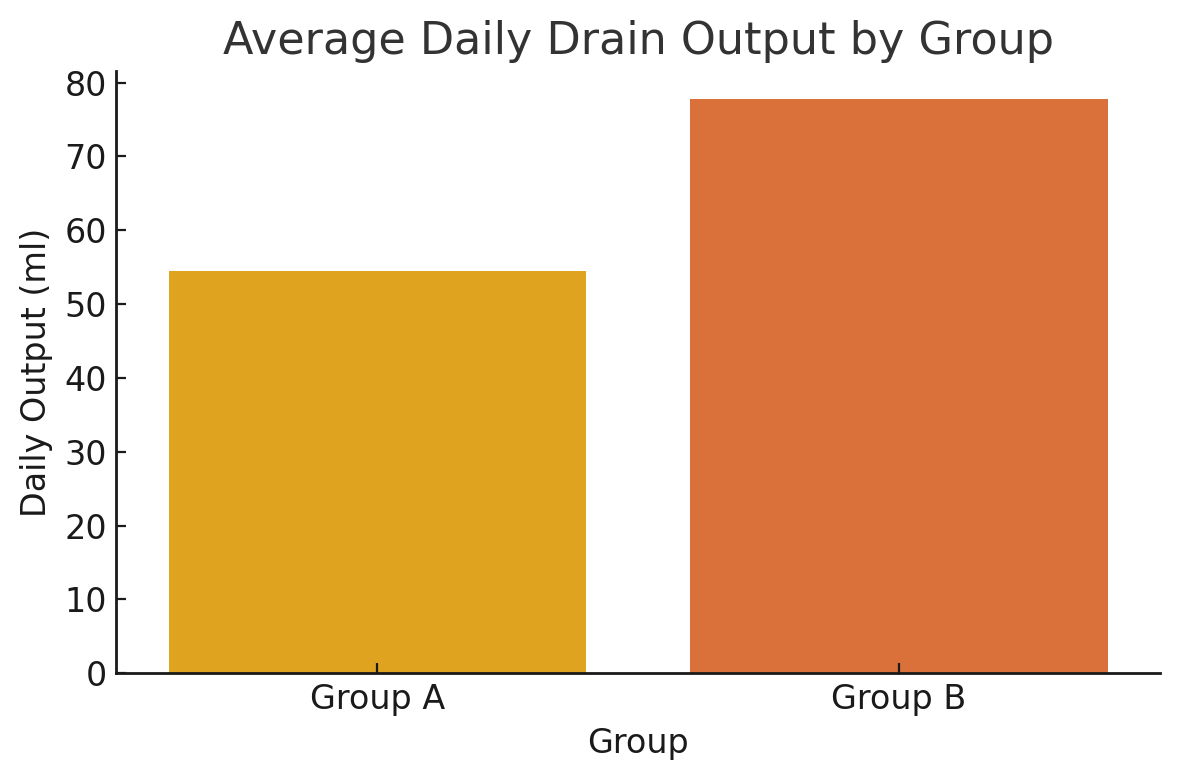
Likewise, the average daily drain output was also significantly lower in Group A, measuring 54.5 mL/day as compared to 77.7 mL/day in Group B (p = 0.009). These findings indicate that electrocautery not only reduces the total burden of drainage but also results in a lower rate of fluid accumulation per day, possibly due to its thermal sealing effect on lymphatic and vascular channels.
Drain Removal Timing
When comparing the postoperative day of drain removal, there was no statistically significant difference between the two groups (p = 0.892). The similarity in drain duration suggests that the decision for removal was more influenced by the threshold criteria (less than 30 mL in 24 hours) than by the mode of dissection alone. However, the lower output in the electrocautery group suggests that such patients may reach the threshold for drain removal more predictably.
Incidence of Seroma Formation
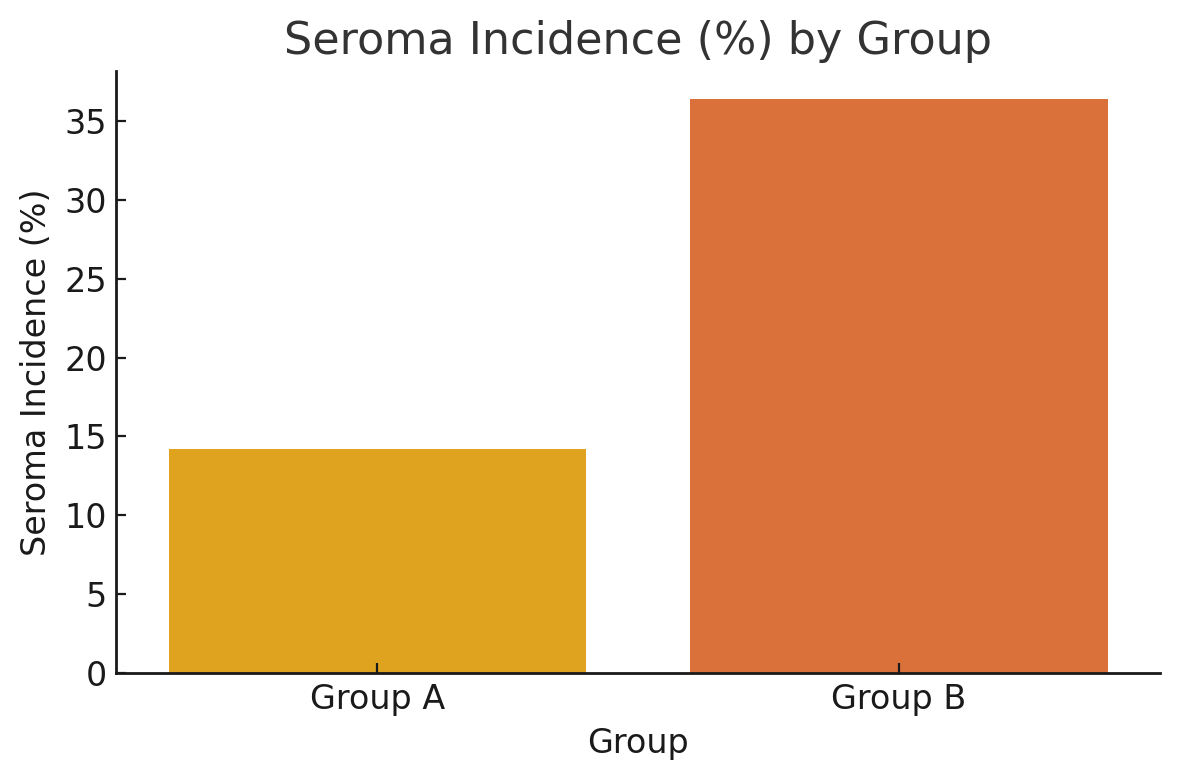
Clinically defined seroma formation—either persistent drain output exceeding 40 mL beyond the 20th postoperative day or palpable fluid collection after drain removal—was observed in 3 out of 24 patients (12.5%) in Group A and in 4 out of 20 patients (20%) in Group B. Although the proportion of seroma cases was lower in the electrocautery group, the difference did not achieve statistical significance. The calculated relative risk (RR) of developing a seroma in Group A compared to Group B was 0.625 with a 95% confidence interval of 0.158 to 2.470, implying a potential protective trend but insufficient evidence to confirm statistical significance.
Graphical and Statistical Interpretation
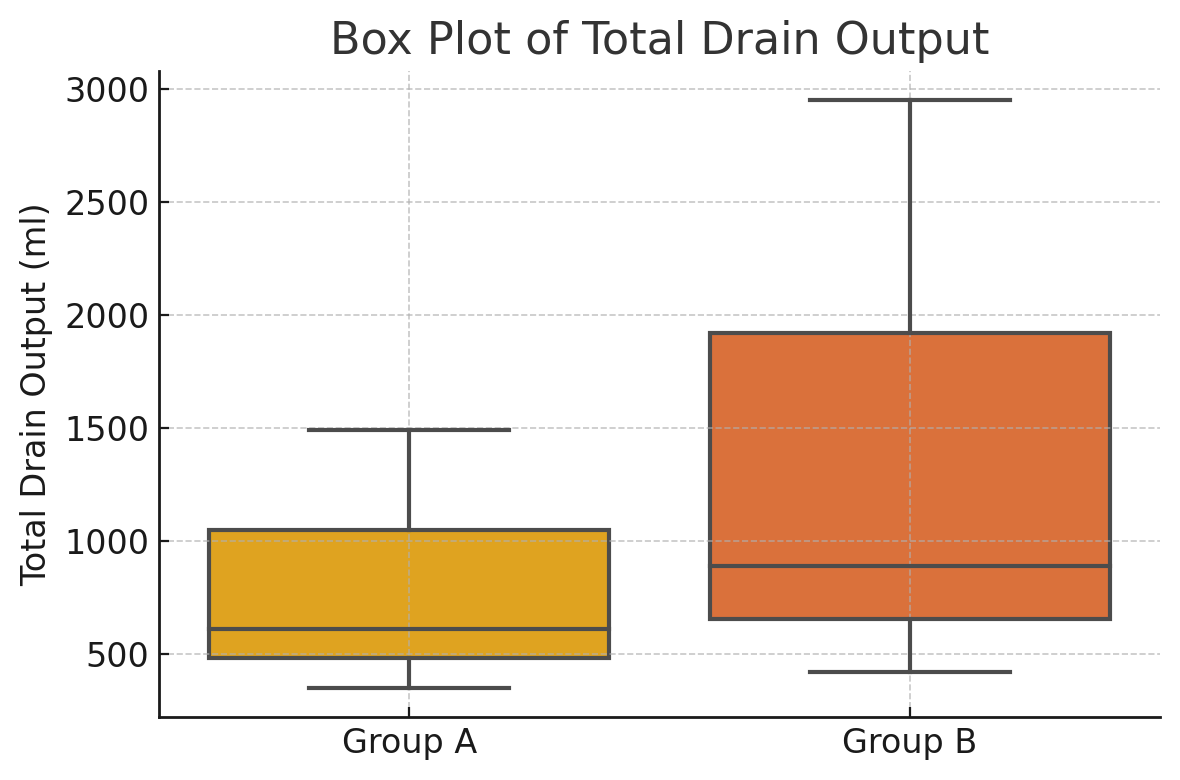
A box plot analysis illustrated a narrower interquartile range and a lower median for total drain output in Group A, reaffirming the quantitative findings. Complementary bar charts visually represented the contrast between the two groups in terms of total drain volume and seroma incidence, further emphasizing the favorable drainage profile in patients undergoing electrocautery dissection.
| Ranks | |||||
| GROUP | N | Mean Rank | Sum of Ranks | p value | |
| Seroma volume at DAY – 7 | Group A | 3 | 4.50 | 13.50 | 0.593 |
| Group B | 4 | 3.63 | 14.50 | ||
| Total | 7 | ||||
| Total drain output | Group A | 24 | 16.98 | 407.50 | 0.003 |
| Group B | 19 | 28.34 | 538.50 | ||
| Total | 43 | ||||
| post operative day of drain removal | Group A | 24 | 21.77 | 522.50 | 0.892 |
| Group B | 19 | 22.29 | 423.50 | ||
| Total | 43 | ||||
| daily average | Group A | 24 | 17.58 | 422.00 | 0.009 |
| Group B | 19 | 27.58 | 524.00 | ||
| Total | 43 |
Group A patients had significantly lower total drain and daily average output when compared with group B.
| GROUP * Seroma at DAY - 7 | ||||||
| Seroma at DAY - 7 | Relative risk | 95% CI | ||||
| Yes | No | |||||
| GROUP | Group A | Count | 3 | 21 | 0.625 | 0.158-2.470 |
| % within GROUP | 12.5% | 87.5% | ||||
| Group B | Count | 4 | 16 | Ref | ||
| % within GROUP | 20.0% | 80.0% | ||||
| Total | Count | 7 | 37 | |||
| % within GROUP | 15.9% | 84.1% |
Risk of seroma at day 7 was not significantly different between group A and group B.
Key findings:
The Mann–Whitney U test results for key parameters are summarized below:
-
Mean total drain output: Statistically significant reduction in Group A, Group A – 610 mL vs Group B – 888 mL (p=0.003)
-
Daily average drain output: Statistically significant reduction in Group A, Group A – 54.5 mL vs Group B – 77.7 mL (p=0.009)
-
Day of drain removal: No significant difference (p=0.892)
-
Seroma incidence: Group A – 12.5%, Group B – 20% (Relative Risk = 0.625; 95% CI: 0.158–2.470; not statistically significant)
Graphical analyses indicated a narrower range and lower median values in Group A, supporting better drainage profiles with electrocautery.
Discussion
This study highlights a significant reduction in drain output when electrocautery is used for dissection, without a statistically significant difference in seroma rates. Electrocautery possibly limits lymphatic leakage by thermally sealing vessels, whereas sharp dissection may leave open channels.
Our results align with Srivastava et al.,[13] who reported lower drain volumes with electrocautery. Conversely, others like Vinton et al.,[14] warned about potential tissue damage impairing healing. Uniform techniques and exclusion criteria enhance the reliability of our results.
Although not powered to detect long-term sequelae, this study suggests electrocautery may be a practical, cost-effective option for minimizing postoperative drainage in MRM. Future research could integrate inflammatory markers or imaging to better elucidate healing dynamics.
Conclusion
In conclusion, while both techniques are safe and clinically acceptable, the use of electrocautery was associated with significantly reduced postoperative drainage volumes and a trend toward reduced seroma formation.
Declarations
Authorship contribution
All authors have contributed equally.
Conflict of interest
The authors declare that they have no conflicts of interest.
Financial disclosure
None
Acknowledgments
None
Data Availability
Data available on corresponding author upon a responsible request.
References
- Hashemi E, Kaviani A, Najafi M, Ebrahimi M, Hooshmand H. Seroma formation after surgery for breast cancer. World J Surg Oncol. 2004; 2:44. Google Scholar ↗
- Agrawal A, Ayantunde AA, Cheung KL. Concepts of seroma formation and prevention in breast cancer surgery. ANZ J Surg. 2006;76(12):1088–95. Google Scholar ↗
- Porter KA, O’Connor S, Rimm E, Lopez M. Electrocautery as a factor in seroma formation following mastectomy. Am J Surg. 1998;176(1):8–11. Google Scholar ↗
- Lumachi F, Basso SM, Santeufemia DA, Bonamini M, Chiara GB. Drainage vs no drainage after axillary lymph node dissection in breast cancer surgery: a randomized trial. Breast. 2004;13(5):387–90. Google Scholar ↗
- Deo, Svs et al. “A comparative study of modified radical mastectomy using harmonic scalpel and electrocautery.” Singapore medical journal 43 5 (2002): 226-8. Google Scholar ↗
- van Bemmel AJ, van de Velde CJH, Schmitz RFM, Liefers GJ, Plaisier PW. Prevention of seroma formation after axillary dissection in breast cancer: a systematic review. Eur J Surg Oncol. 2011;37(10):829–35. Google Scholar ↗
- Gilly FN, Sayag-Beaujard AC, Perrotin C, et al. Prevention of seroma after axillary lymphadenectomy by using fibrin glue: a randomized clinical trial. Int J Clin Oncol. 2000;5(3):173–7. Google Scholar ↗
- Purushotham AD, McLatchie E, Young D, George WD. Randomized clinical trial of no wound drains and early discharge in the treatment of women with breast cancer. Br J Surg. 2002;89(3):286–92. Google Scholar ↗
- Watt-Boolsen S, Nielsen VB, Jensen J, Bak S. Postmastectomy seroma: influence of seroma on wound healing and infections following mastectomy. Eur J Surg Oncol. 1989;15(4):345–9. Google Scholar ↗
- Srivastava V, Basu S, Shukla VK. Seroma formation after breast cancer surgery: what we have learned in the last two decades. J Breast Cancer. 2012;15(4):373–80. Google Scholar ↗
- Woodworth PA, McBoyle MF, Helmer SD, Beamer RL. Seroma formation after breast cancer surgery: incidence and predicting factors. Am Surg. 2000;66(5):444–50. Google Scholar ↗
- Coveney EC, O’Dwyer PJ, Geraghty JG, O’Higgins NJ. Effect of closing dead space on seroma formation after mastectomy. Surg Gynecol Obstet. 1993;176(6):559–62. Google Scholar ↗
- Kuroi K, Shimozuma K, Taguchi T, Imai H, Yamashiro H, Ohsumi S, et al. Pathophysiology of seroma in breast cancer. Breast Cancer. 2005;12(4):288–93. Google Scholar ↗
- Vinton AL, Traverso LW, Diggs BS, Thirlby RC. Wound complications after modified radical mastectomy compared with breast-conserving therapy. Am J Surg. 1990;160(5):495–9. Google Scholar ↗