
Abstract
Introduction: Chronic wounds in elderly intensive care unit (ICU) patients present a significant clinical challenge, as they are frequently colonized or infected by multidrug-resistant bacteria. This study aimed to evaluate the clinical outcomes of topical probiotic treatment in ICU patients with chronic wounds unresponsive to conventional therapies. Materials and Methods: Patients were prospectively selected based on non-healing wounds, infected or colonized by virulent microorganisms. Inclusion was limited to "compassionate cases" with failure of standard wound care therapies and no other non-invasive options available. The treatment protocol involved daily wound cleansing with hydrogen peroxide and/or saline, followed by application of a mixture of hydrogel and lactic acid-producing probiotics. Wound swabs for culture were collected whenever feasible, both before and during treatment. Infected cases were monitored for vital signs, inflammatory markers, and photographic documentation. Results: Eight patients were included. All wounds demonstrated consistent clinical improvement. Four cases achieved complete healing; one patient died from unrelated causes before final wound closure. Culture swabs revealed shifts in microbial sensitivity profiles or changes in predominant organisms. Notably, all wounds showed accelerated healing within weeks compared to standard of care, despite patients' severe malnutrition and comorbidities such as vascular insufficiency, medication-related skin damage, or fecal contamination. Conclusion: Topical probiotics may represent a safe and effective adjunctive therapy for chronic wound management in critically ill patients, particularly in the presence of MDR bacterial colonization or infection. These findings support further exploration through randomized controlled trials.
Keywords
chronic wounds wound healing probiotics bacteriotherapy.
Introduction
Bacteriotherapy has been employed empirically by civilizations for millennia [1], long before its scientific foundations were described in 1905 by Metchnikoff [2]. The World Health Organization later formally defined probiotics as live microorganisms that confer health benefits when administered in adequate amounts [3]. Recently, the resurgence of interest in probiotics in clinical medicine has been driven by the escalating challenge of multidrug-resistant organisms (MDROs) [4-7].
Numerous in vitro and in vivo studies have demonstrated that probiotics can enhance wound healing and inhibit virulent pathogens [8-16]. Additionally, clinical trials have demonstrated that oral probiotics can reduce postoperative complications, including infections, wound dehiscence, and anastomotic leaks [17-21]. However, the topical application of probiotics in human wound care remains underexplored [22-24].
Our institution—equipped with a Long-Term Ventilation Unit (LTVU)—cares for highly vulnerable patients with multi-organ failure who require prolonged mechanical ventilation, dialysis, nutritional support, and individualized wound care. These patients are prone to colonization or infection by virulent organisms, contributing to impaired wound healing, sepsis, and mortality.
Building on published work by Peral et al. in South America and Venosi et al. in Italy, where topical lactic acid-producing bacteria were applied to infected burn wounds and vascular ulcers [22-24], we hypothesized that similar bacteriotherapy could benefit our critically ill ICU patients with chronic wounds unresponsive to all other available therapies.
Materials and Methods
This prospective case series was conducted at Reem Hospital’s LTVU from July 2024 to July 2025. Eligible patients presented with chronic wounds—infected or colonized—that failed to respond to all conventional wound care treatments, and they were not good candidates for any invasive management. Systemic antibiotic use was documented but not used as a determinant for study inclusion.
Patient evaluation included a full medical history, clinical examination, laboratory investigations, and relevant diagnostic imaging. The majority of patients were classified as ASA IV (American Society of Anesthesiologists), had a Glasgow Coma Scale (GCS) score below 7, were ventilated via tracheostomy, and received both enteral feeding and hemodialysis.
Informed consent was obtained from each patient's legal guardian following a multidisciplinary case review involving intensivists, case managers, surgeons, and wound care nurses. Ethical approval was granted by the institutional review board for the compassionate use of probiotics. The primary study objective was to assess safety; secondary objectives included effects on wound healing and microbial colonization/infection.
Wounds were categorized as infected or colonized using the STONEES criteria (erythema, warmth, friable granulation, purulent exudate, odor, and pain) [25,26]. In the LTVU setting, all chronic non-healing wounds were considered colonized by default.
Wound swabs were collected on day 0, days 7, and day 14 when feasible. Wounds were cleaned with saline and/or hydrogen peroxide and dressed once or twice daily. A lactic acid-producing probiotic gel was applied directly to the wound bed, followed by a contact layer and a secondary dressing. Wound dimensions (length, width, depth), surrounding skin status, exudate volume, and quality were documented per international guidelines [16,25,26]. Data were recorded by the surgical team and wound care nurses, along with serial photographs at each dressing change.
Results
Patient Overview
Eight ASA IV patients were included. All had non-healing chronic wounds of various etiologies and severe comorbidities, including end-stage organ failure. Seven patients were ventilated via tracheostomy; all had presented with diabetes mellitus (DM), had atherosclerotic disease, and required enteral nutrition and hemodialysis.
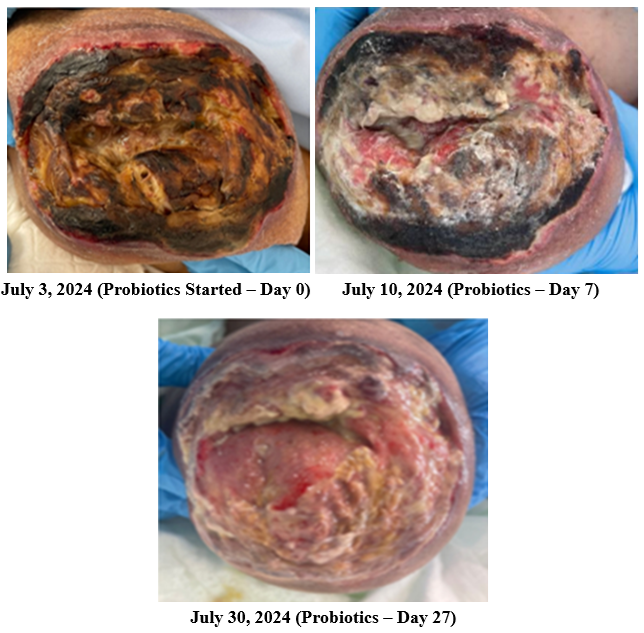
Patient A: 87-year-old male with right above-knee amputation stump dehiscence. Initial local wound infection with highly resistant Pseudomonas aeruginosa and Klebsiella pneumoniae progressed to septicemia despite broad-spectrum IV antibiotics. After 1 week of initiation of the probiotic protocol and concurrent 2 weeks of IV antibiotics, granulation tissue appeared and the CRP level decreased. By day 12, cultures showed only Candida tropicalis sensitive to all antibiotics tested. The wound was no longer infected and was planned for closure when the patient succumbed to unrelated mesenteric ischemia (Figure 1).
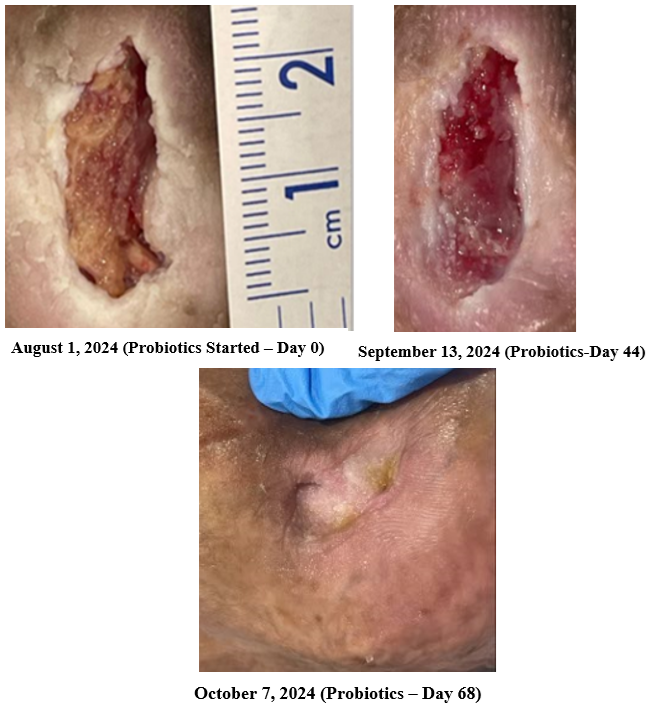
Patient B: 66-year-old male with a non-healing ischemic ulcer over the first metatarsal joint of the left foot, for 8 months colonized by a multidrug-resistant Escherichia coli strain. He presented with severe depression and anorexia, liver failure with chronic ascites, hemodialysis, and enteral nutrition. The wound was deteriorating with signs of systemic infection despite initiation of IV antibiotics for a week. Following probiotic treatment and concurrently IV antibiotics, progressive healing was observed - resolution of signs of systemic infection after 10 days and culminating in full epithelialization at 13 weeks (Figure 2).
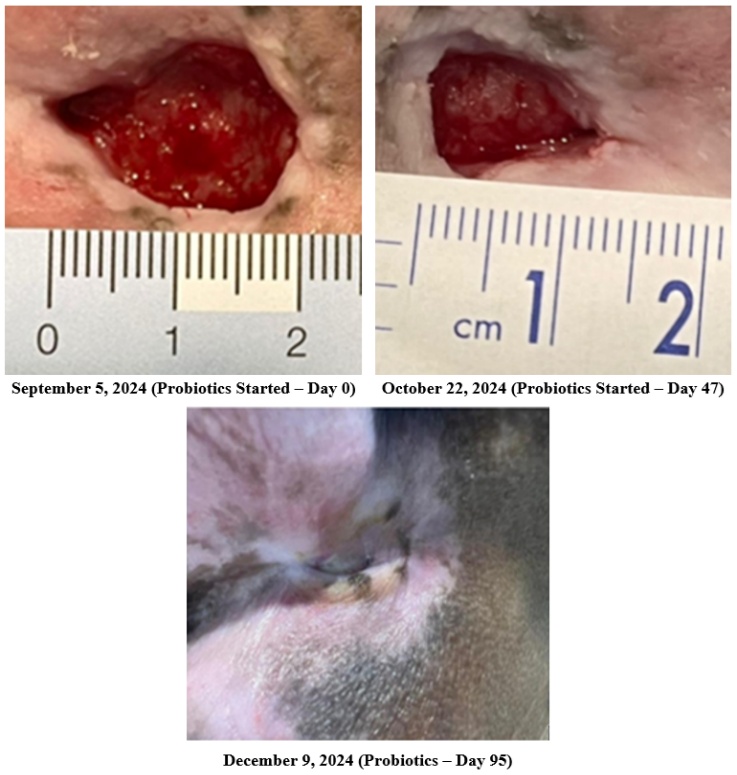
Patient C: 70-year-old male, with chronic ischemic heart disease, history of stroke after atrial fibrillation, lupus nephritis that led to kidney failure, was admitted with a Stage 4 sacral bed sore. Despite various treatments, including silver dressings, oxygen spray, collagen, and matrix metalloproteinases modulators, healing stagnated for six months due to the proximity of the wound to the anus and diarrheic stool contamination. However, significant improvement was noted and the wound completely healed after three months of bacteriotherapy (Figure 3). Interestingly, the swab culture never showed any bacterial growth, neither before nor after treatment.
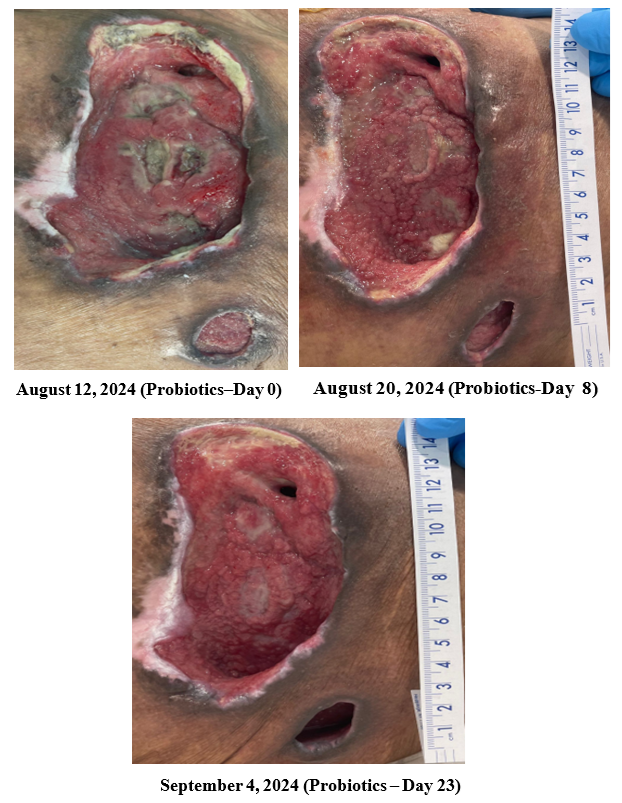
Patient D: 63 yo female cachectic (100 kilo loss within months of admission) presenting with a 2-year history of a large stage 4 sacral ulcer, infected with MDR E.Coli. This wound had multiple undermining as a result of the excessive loose skin and was the starting point of a severe sepsis treated with intravenous antibiotics and vasopressors. Probiotics were started once the antibiotherapy was deemed inefficient and the prognosis was compromised. Sepsis subsided within 7 days, the wound started to granulate, and the antibiogram shifted towards a multi-sensitive strain of Klebsiella pneumoniae. The patient was deemed ready for skin graft by our plastic surgeon by day 23, once the whole cavity and undermining were filled with healthy granulation. Later, the graft failed due to uncontrollable shear movements of her loose skin during mobilization. The wound was about to be primarily closed at the end of this study (Figure 4).
Patient E: 79-year-old male, ventilated through tracheostomy, known for ischemic cardiovascular and cerebral disease, end-stage renal disease, and DM. He presented to our ICU with sepsis and an infected perianal ulcer chronically contaminated by fecal matter (ulcer likely posttraumatic). Initial swab culture showed a MDR E. Coli, and he was treated with IV antibiotics for 10 days and vasopressors. A diverting colostomy was repeatedly postponed due to clinical instability. After 1 week of probiotic treatment, the wound healed steadily, signs of infection were resolved and no recurrence or need for surgical intervention. There was no bacterial growth on the culture swab one month after bacteriotherapy was started despite persistent fecal contamination. (Figure 5).
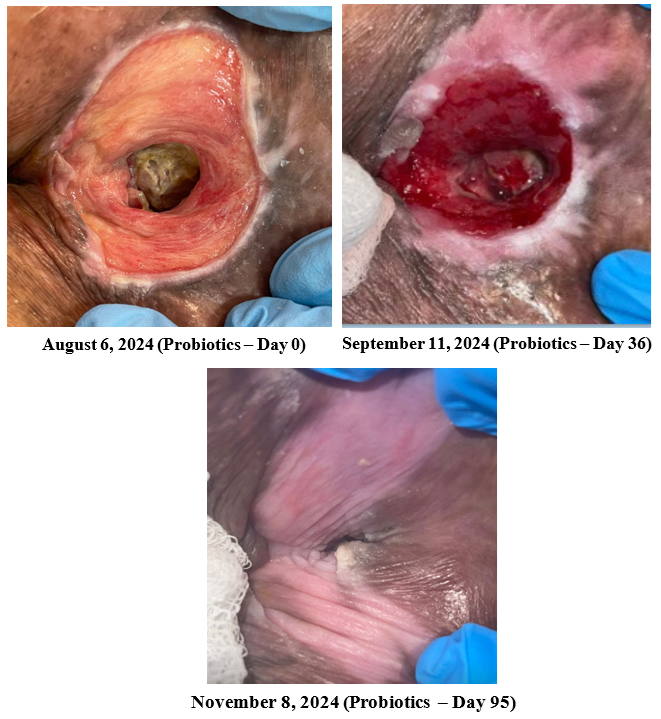
Patient F: 83-year-old male patient with a history of multiple strokes and extensive atherosclerosis. He was admitted with a sacral deep tissue injury that deteriorated to Stage 4 due to uncontrolled fecal contamination. Although a fecal containment device (Flexi-seal) was applied, there was still persistent fecal leakage due to sphincteric weakness. The wound initially developed signs of spreading infection locally, with bone involved and systemically. Initial wound swab identified Enterococcus avium and Pseudomonas Aeruginosa in the wound, blood, and sputum. Both displayed moderate resistance to the tested antibiotics. Intravenous antibiotics were administered for 3 weeks, along with daily topical bacteriotherapy. The wound improved and signs of infection resolved after 2 weeks and on the 3rd week of treatment, all wound culture tests consistently showed no growth. (Figure 6)
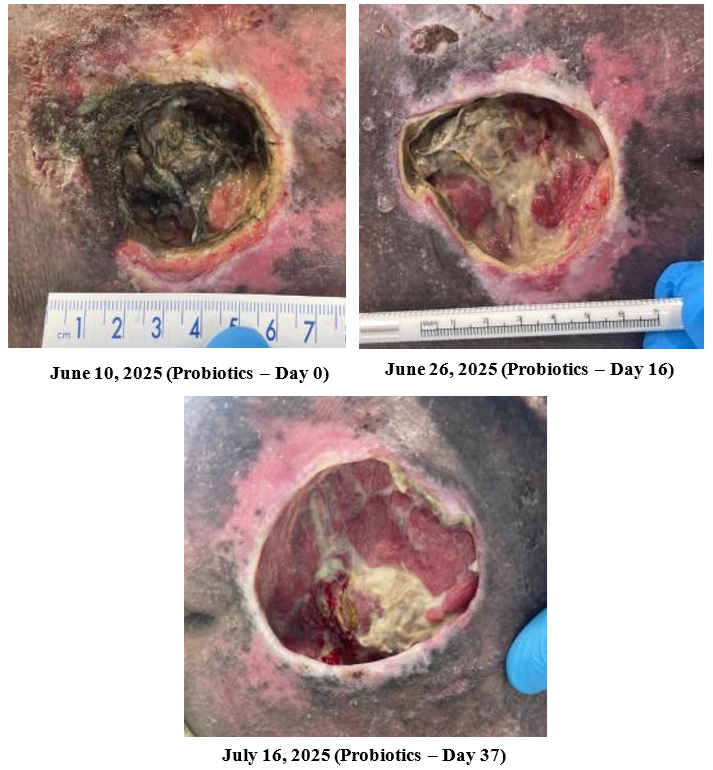
Patient G: 73-year-old male patient presented with a history of stroke, ischemic heart disease, and DM (with mechanical ventilation, hemodialysis and enteral nutrition). Upon admission, he was found with a stage 4 pressure injury on his sacrum. The initial wound swab identified Citrobacter koseri with intermediate resistance to antibiotics. The wound showed no clinical signs of infection; however, due to the risk of infection from frequent stool contamination, probiotic therapy was initiated. Concurrently, the patient was receiving intravenous antibiotics for a respiratory infection. The wound continued to heal steadily without any evidence of infection. In addition, a wound swab taken two weeks after starting probiotics revealed no microbial growth. Despite occasional fecal contamination, the wound ultimately healed after five months, with no subsequent infection. (Figure 7)
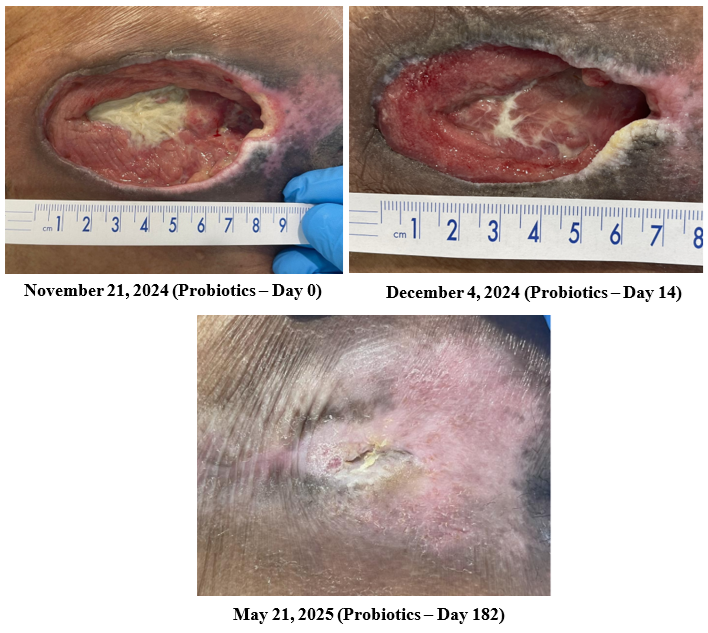
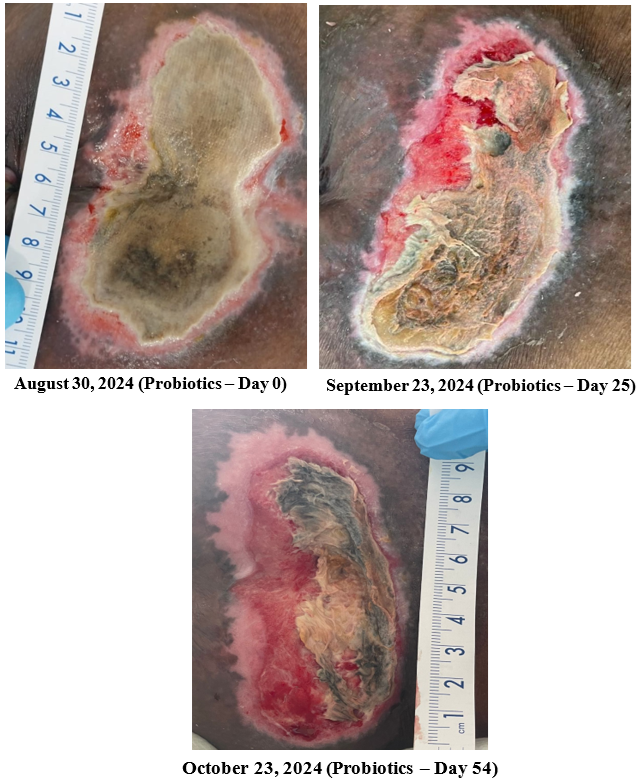
Patient H: A 65-year-old female patient with a background of chronic respiratory failure requiring ventilatory support, multiple cerebrovascular accidents, hypertension, type 2 diabetes mellitus, and atherosclerosis. She was admitted with an unstageable pressure injury on the sacrum. The ulcer's condition was further complicated by daily fecal contamination as a result of the patient's incontinence. Probiotics were initiated to manage the situation, leading to significant improvement in the wound's healing with no evident signs of infection, even in the face of ongoing contamination issues (Figure 8).
Discussion
The skin microbiome varies depending on the host’s health status, diet, and the anatomical site (whether oily, moist, or dry) [27-29]. Sixty to eighty percent of acute wounds are known to develop biofilms, and in our clinical experience, all chronic wounds are affected by biofilm-forming bacteria. These biofilms arise from a disrupted skin microbiome and are a key factor in delayed wound healing [25,30].
Biofilm-producing bacteria exhibit significantly higher resistance to antimicrobial agents—both topical and systemic—compared to planktonic forms. The most commonly encountered multidrug-resistant organisms (MDROs) in hospital-acquired infections—such as Staphylococcus aureus, Escherichia coli, Enterococcus faecalis, Pseudomonas aeruginosa, and Proteus mirabilis—are all known to form biofilms [5,31]. These organisms proliferate slowly, evade immune responses, exchange antibiotic resistance genes via quorum sensing, and are protected by an extracellular polymeric substance (EPS) matrix that shelters them from host defenses and therapeutic agents [30,32].
This persistent inflammatory environment prevents wound resolution, and conventional interventions—including topical antimicrobials and surgical debridement—are often ineffective or exacerbate tissue damage [25,33].
Patients in Long-Term Ventilation Unit (LTVU) represent an extremely high-risk population, characterized by multi-organ dysfunction, malnutrition despite enteral support, and likely dysbiosis of both gut and skin microbiomes due to prolonged institutionalization. In such patients, chronic wounds often persist for months and are frequently associated with mortality.
This is the first case series evaluating the topical use of probiotics on non-healing chronic wounds in vulnerable patients, to date.
Despite the limited sample size, all patients in this study demonstrated clinically significant improvement in wound healing after the introduction of topical bacteriotherapy. Notably, there were no adverse effects or signs of secondary infection linked to probiotic use. The mechanism of probiotic action is thought to include environmental acidification, competition for nutrients and the release of antimicrobial metabolites that inhibit pathogen growth [13,31]. Additionally, probiotics may promote keratinocyte and fibroblast migration and differentiation, while also modulating the local immune response and reducing inflammation [35-38]. Interestingly, in this sample of patients, all septic shock cases that did not timely improve with intravenous wide-spectrum antibiotics started to do so once topical bacteriotherapy was started. This could open an avenue for research on its potential systemic impact.
Concurrent findings have been reported in other studies. In Cape Town’s main burn ICU, Kleintjes et al. used probiotic-based cleansers on the external environment around severely burned patients. Compared to standard alcohol-based antiseptics, this intervention reduced hospital-acquired infections by 53% [39].
The described clinical outcomes in this study also align with dermatological research that supports the topical use of probiotics in conditions like acne, dermatitis, and alopecia—diseases increasingly understood to involve microbial dysbiosis and altered immunological responses [40,41]. Furthermore, the findings of Peral et al. noted that the patient’s underlying diabetic condition had minimal impact on the success of topical bacteriotherapy [23].
While this observational case series has limitations—including its small sample size, lack of a control group, and variability in probiotic dosage—it provides valuable preliminary evidence. Probiotic quantities were adjusted empirically based on wound size and caregiver discretion, yet no culture swabs ever yielded growth of the probiotic strains themselves. This finding is consistent with Peral et al., who similarly failed to isolate Lactobacillus plantarum from wound cultures despite daily applications.
The concurrent use of systemic antibiotics was not controlled for or excluded. In two cases, pathogens were resistant to nearly all antibiotics available at our facility, highlighting the potential complementary role of probiotics in antibiotic-refractory infections.
Conclusion
Multidrug resistance remains a pressing global issue in high-acuity healthcare settings, with limited therapeutic options available for critically ill patients. Topical probiotics offer a promising adjunctive strategy for wound management, particularly in patients with chronic, infected, or colonized wounds unresponsive to standard care.
Our small case series suggests that topical bacteriotherapy is safe, well-tolerated, and potentially effective—even in highly vulnerable patients with severe comorbidities. These findings justify further research and support the need for larger, randomized controlled trials to confirm efficacy, optimize dosage, and establish standardized protocols.
Declarations
Ethical Approval
Approved by ethics committee
Consent of Publication
Taken
Conflict of Interest
None
Funding Statement
No funding.
Data Availability
All data available on corresponding author upon a responsible request.
References
- Wallace T.C., MacKay D. The safety of probiotics: considerations following the 2011U.S. Agency for Health Research and Quality report. J Nutr 2011; 141:1923–4 Google Scholar ↗
- Allan McI Mowat. Historical Perspective: Metchnikoff and the intestinal microbiome. J Leukoc Biol. 2021 Feb 25;109(3):513–517 Google Scholar ↗
- World Health Organization Report of a Joint FAO/WHO Expert Consultation on Evaluations of Health and Nutritional Properties of Probiotics in Food Including Powder Milk and Live Lactic Acid Bacteria. Geneva: World Health Organization, 2001. Google Scholar ↗
- Tacconelli E., Carrara E., Savoldi A., et al. Discovery, research, and development of new antibiotics: the WHO priority list of antibiotic-resistant bacteria and tuberculosis. Lancet Infect Dis. 2018;18(3):318–327 Google Scholar ↗
- Tzaneva V., Mladenova I., Todorova G., et al. Antibiotic treatment and resistance in chronic wounds of vascular origins. Clujul Med. 2016;89(3):365-70 Google Scholar ↗
- Youenn A., Le Berre R., Barbier G., et al. Screening of Lactobacillus spp for the prevention of Pseudomonas Aeruginosa pulmonary infections. BMC Microbiol. 2014 Apr 27:14:107. Google Scholar ↗
- Moghadam M.T., Khoshbayan A., Chegini Z., et al. Bacteriophages, a New Therapeutic Solution for Inhibiting Multidrug-Resistant Bacteria Causing Wound Infection: Lesson from Animal Models and Clinical Trials. Drug Des Devel Ther. 2020; 14: 1867–1883 Google Scholar ↗
- Hongtao X., Yaqian L., Jiangping S., et al. Highly active probiotic hydrogels matrixed on bacterial EPS accelerate wound healing via maintaining stable skin microbiota and reducing inflammation. Bioactive Materials 35 (2024) 31-44 Google Scholar ↗
- Ming Z., Han L., Bao M., et al. Living bacterial hydrogels for accelerated infected wound healing. Adv Sci (Weinh). 2021 Dec;8(24) Google Scholar ↗
- Lukic J., Chen V., Strahinic I., Begovic J., et al. Probiotics or prohealers: the role of beneficial bacteria in tissue repair. Wound Repair Regen, 2017 Nov;25(6):912-922. Google Scholar ↗
- Argenta A., Satish L., Gallo P., et al. Local application of probiotic bacteria prophylaxes against sepsis and death resulting from burn infection. PLoS One. 2016 Oct 25;11(10):e0165294. Google Scholar ↗
- Kazemi A., Soltani S., Ghorabi S., et al. Effect of probiotic and symbiotic supplementation on inflammatory markers in health and disease status: a systematic review and meta-analysis of clinical trials. Clin Nutr.2020 March; 39(3) 789-819 Google Scholar ↗
- Ramos A.N., Cabral M.E., Noseda D., et al. Antipathogenic properties of Lactobacillus Plantarum on Pseudomonas Aeruginosa: the potential use of its supernatants in the treatment of infected chronic wounds. Wound Repair Regen. 2012 Jul-Aug;20(4):552-62. Google Scholar ↗
- Żółkiewicz J., Marzec A., Ruszczyński M., et al. Postbiotics - a step beyond pre- and probiotics. Nutrients. 2020 Jul 23;12(8):2189. Google Scholar ↗
- Valdéz J.C., Peral M.C., Rachid M., et al. Interference of Lactobacillus Plantarum with Pseudomonas Aeruginosa in vitro and in infected burns: the potential use of probiotics in wound treatment. Clin. Microbiol. Infect.2005 Jun;11(6):472-9 Google Scholar ↗
- Murphy C., Atkin L., Swanson T., et al. Defying hard-to-heal wounds with an early antibiofilm intervention strategy: wound hygiene Journal of Wound Care Vol. 29, International Consensus Document Google Scholar ↗
- Noshadi N., Heidari M., Kermanshahi M.N., et al. Effect of probiotics supplementation on CRP/IL-6 and length of ICU stay in trauma brain injury and multiple trauma patients. Evidence-Based Complem. & Altern.Medicine 2022 Google Scholar ↗
- Bădăluță V.A., Curuțiu C., Dițu L.M., et al. Probiotics in wound healing. International Journal of Molecular Sciences, May 2024;25(11):5723 Google Scholar ↗
- Petrof E.O., Dhaliwal R., Manzanares W., et al Probiotics in the critically ill: a systematic review of the randomized trial evidence. Review Crit.Care Med 2012 Dec;40(12)3290 Google Scholar ↗
- Bekiaridou A., Karlafti E., Oikonomou I.M. et al. Probiotics and Their Effect on Surgical Wound Healing: A Systematic Review and New Insights into the Role of Nanotechnology. Nutrients. 2021 Nov 26;13(12):4265. Google Scholar ↗
- Bădăluță VA, Curuțiu C, Dițu LM, Holban D., et al. Probiotics in wound healing. Int J Mol Sci. 2024 May 24;25(11):5723. Google Scholar ↗
- Peral M.C., Martinez M., Valdez J.C. Bacteriotherapy with Lactobacillus Plantarum in burns. Int.Wound J. 2009 Feb;6(1):73-81 Google Scholar ↗
- Peral M.C., Rachid M.M., Gobbato N.M., et al. Interleukin 8 production by polymorphonuclear leukocytes from patients with chronically infected leg ulcers treated with Lactobacillus Plantarum. Clin Microbiol Infect.2010 Mar;16 (3):281-6 Google Scholar ↗
- Venosi S., Ceccarelli G., De Angelis M, et al. Infected chronic ischemic wound topically treated with a multi-strain probiotic formulation: a novel tailored treatment strategy. J Transl Med. 2019 Nov 9;17(1):364. Google Scholar ↗
- Schultz GS, Sibbald RG, Falanga V, et al. Wound bed preparation: a systematic approach to wound management. Wound Repair Regen. 2003 Mar;11 Suppl 1:S1-28. Google Scholar ↗
- Sibbald R.G., Elliott J.A., Persaud-Jaimanga R., et al. Wound Bed Preparation 2021. Adv Skin Wound Care. 2021 Apr 1;34(4):183-195. Google Scholar ↗
- Chen YE, Fischbach MA, Belkaid Y. Skin microbiota-host interactions. Nature. 2018 Jan 24;553(7689):427-436. Google Scholar ↗
- Sinha A., Sagar S., Osborne J., et al. Probiotic bacteria in wound healing: an in vivo study. Iran J. Biotechnol. 2019 dec;17(4) Google Scholar ↗
- Fijan S., Frauwallner A., Langerholc T., et al. Efficacy of using probiotics with antagonistic activity against pathogens of wound infections: an integrative review of literature, Biomed. Res. Int, Dec 12:2019:7585486. Google Scholar ↗
- Zhao G., Usui M.L., Lippman S.I., James G.A., et al. Biofilms and inflammation in chronic wounds. Adv Wound Care (New Rochelle) 2013 Google Scholar ↗
- Besser M., Terberger J., Weber J., et al. Impact of probiotics on pathogen survival in an innovative human plasm biofilm model (hpBIOM). J Transl Med. 2019 Jul 25;17(1):243. Google Scholar ↗
- Dai T., Huang Y.Y., Sharma S.K., et al. Topical antimicrobials for burn wound infection. Recent Pat Antiinfect Drug Discov. 2010 Jun;5(2):124-51. Google Scholar ↗
- Dissemond J, et al. Diagnosis and treatment of chronic wounds: current standards of Germany's Initiative for Chronic Wounds e V. J Wound Care. 2017;26(12):727–732. Google Scholar ↗
- Sonal Sekhar M., Unnikrishnan M.K., Vijayanarayana K., et al.Topical application/formulation of probiotics: will it be a novel treatment approach for diabetic foot ulcer? Med Hypotheses 2014 Jan; 82 (1):86-8 Google Scholar ↗
- Farahani F., Moraffah F., Samadi N., et al. Improved infectious burn wound healing by applying lyophilized particles containing probiotics and prebiotics. Int.J. Pharm. 2023 Apr 5:636:122800. Google Scholar ↗
- Golkar N., Ashoori Y., Heidari R., et al. A novel effective formulation of bioactive compounds for wound healing: preparation in vivo, characterization and comparison of various post biotic cold creams in a rat model. Evidence-based Complement. & Alternat. Medicine, December 2021 Google Scholar ↗
- Khodaii Z., Afrasiabi S, Hashemi S.A., et al. Accelerated wound healing process in rats by probiotic Lactobacillus Reuteri derived ointment. J Basic Clin Physiol Pharmacol. 2019 May 28;30(3). Google Scholar ↗
- Brandi J., Cheri S., Manfredi M., et al. Exploring the wound healing, anti-inflammatory, anti-pathogenic and proteomic effects of lactic acid bacteria on keratinocytes. Sci Rep. 2020 Jul 14;10(1):11572. Google Scholar ↗
- Kleintjes W.G., Prag R., Ebrahim M., et al. The role of probiotics for environmental cleaning in a burn unit: A non-randomised controlled prospective study. December 2019 S. Afr.J of Plast. & Rec. &. Aesth. Surg. & Burns 2(3):72 Google Scholar ↗
- Dessinioti C., Katsambas A.The Microbiome and Acne: Perspectives for Treatment. Derma Dermatol Ther (Heidelb). 2024 Jan 6;14(1):31–44 Google Scholar ↗
- Makrgeorgou A., Leonardi-Bee J., Bath-Hextall F.J., et al. Probiotics for treating eczema. Cochrane Database Syst Rev 2018 Nov 21;11(11) Google Scholar ↗